The Beinecke Rare Book & Manuscript Library at Yale University recently received, through acquisition and donation, the Indie Photobook Library (iPL), a major collection of photobooks from Larissa Leclair ’03 M.A. The collection includes more than 2,000 photobooks from around the world along with related ephemera, archives of the iPL’s history, and Leclair’s personal collection related to self-publishing.
“We were delighted to work with Larissa to acquire this major archive,” says George Miles, Curator of the Yale Collection of Western Americana at the Beinecke. “These volumes build on an already great strength of the library and will surely be used extensively by scholars and students at Yale and beyond for a long time.”
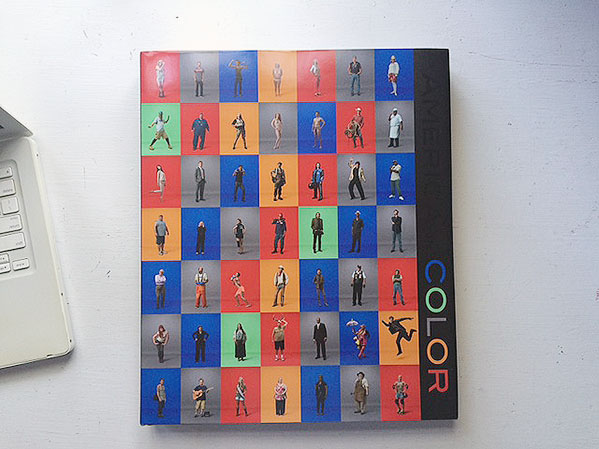
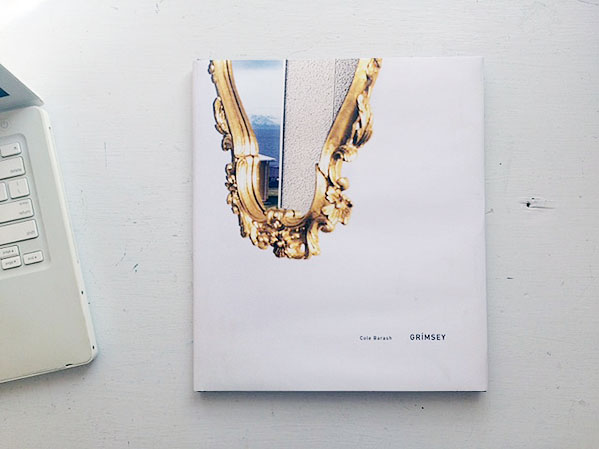
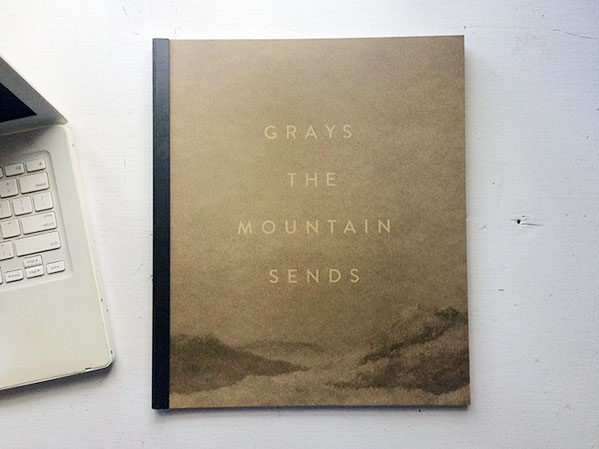
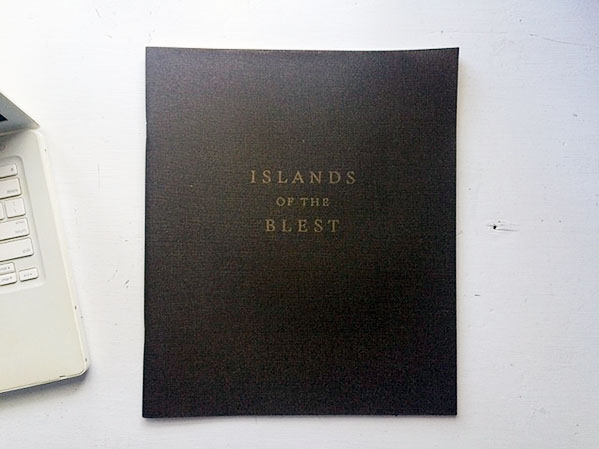
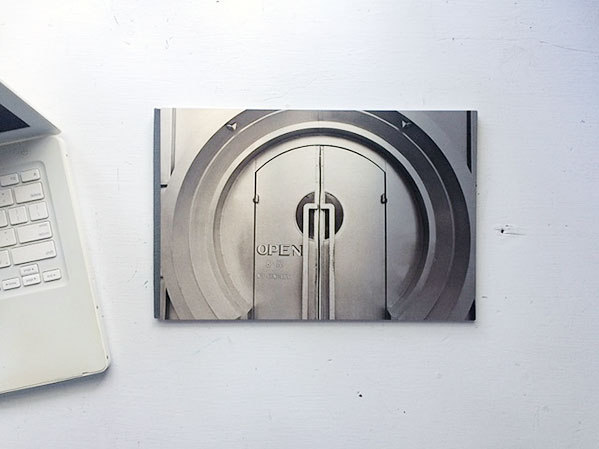
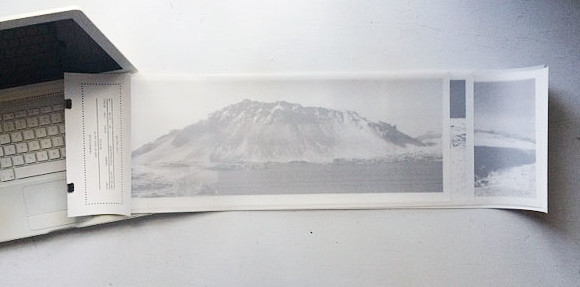
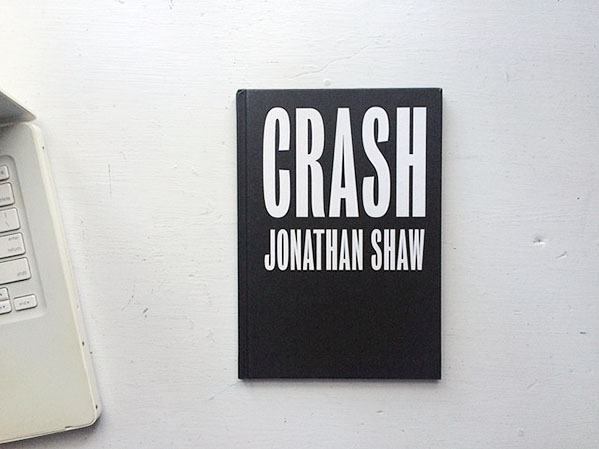
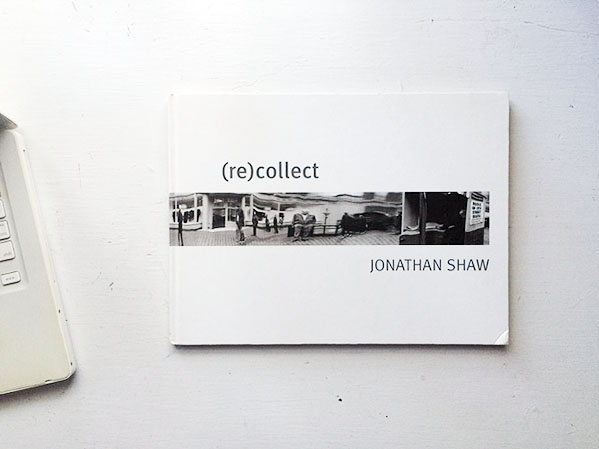
The iPL focuses on self-published photobooks, imprints independently published and distributed, photography exhibition catalogs, print-on-demand photobooks, artists’ books, zines, photobooks printed on newsprint, limited edition photobooks, non-English language photography books, and more.
“This collection reflects a contemporary movement in publishing,” explains Leclair, who began collecting independently produced photobooks in May 2010, “and it allows for the development of future discourse on trends in self-publishing, the ability to reflect on and compare books in the collection, and for scholarly research to be conducted years, decades, and centuries to come. To have this work now at Yale ensures this legacy.”
Inspired by Wexler’s master class
The catalyst for her collection, Leclair notes, was Yale professor Laura Wexler’s “Photo Memory Workshop” master class at the Beinecke, which focused on Peter Palmquist’s Women in Photography Archive. “He had and his collection will continue to have a big impact on the history of photography specifically relating to women in photography,” said the alumna. “He was one individual collecting independently of an institution, making an impact and shaping history. What he had encapsulated for his collection was what I wanted to do for self-published photobooks.”
“As early as 2005, with photographers Stephen Gill, Rob Hornstra, Jason Fulford, and Alec Soth independently publishing amazing photobooks, there wasn’t a platform for the presentation of self-published titles. So the idea of wishing for a central place to look at self-published photobooks was in my head on the day I saw Peter Palmquist’s collection,” notes Leclair.
The moment spurred her own specific collecting, she says: “I was blown away that a single individual could follow his passion, create a collection, and in the process have an impact on the history of photography. I was not only interested in promoting these kinds of books but most importantly I was very interested in creating an archive for the long-term. So two weeks after that master class, with an idea, one book, and a Facebook page, I founded the indie Photobook Library, a browse-able archive for self-published photobooks.”
For Leclair, placing the iPL at the Beinecke fulfills an aspiration she had from the very beginning. “I always intended that the iPL would one day transfer to an established archive. I wanted it to be preserved and accessible to future photo-bibliophiles long after my lifetime. For the legacy of the photographers and photobooks that collectively make the iPL what it is, I am absolutely thrilled that these artists will be part of the Beinecke’s collecting history.”
[Yale Professor Laura Wexler presented the Larissa Leclair with the 9th Annual Focus Awards’ Spotlight Award for far reaching impact in the field of photography, October 2014. (Copyright Griffin Museum of Photography)]
Yale Professor Laura Wexler presented the Larissa Leclair with the 9th Annual Focus Awards’ Spotlight Award for far reaching impact in the field of photography, October 2014. (Copyright Griffin Museum of Photography)
The Beinecke has an renowned collection of 19th century American photographically illustrated books, including such classics as Alexander Gardner’s “Photographic Sketch Book of the Civil War,” A.J. Russell’s “Great West Illustrated,” Josiah Whitney & Carleton Watkins’ “The Yosemite Book,” and Ferdinand Hayden’s “Sun Pictures of Rocky Mountain Scenery,” as well as dozens of other, less well-known examples of the genre.
In the 1920s and 1930s photobooks continued to be a form of artistic expression but also emerged as a major vehicle of social commentary and criticism. The Beinecke holds first editions of such artistic works as Ansel Adams’ “Parmelian Prints of the High Sierra” and Taos Pueblo,” Walker Evans’s “American Photographs,” and Paul Strand’s “Paul Strand.” The Beinecke also boasts a wide range of such politically charged books as Julia Peterkin and Doris Ulman’s collaboration, “Roll Jordan Roll”; James Agee and Walker Evans’ “Let Us Now Praise Famous Men” and “Many are Called”; and Evans’s collaboration with Carleton Beals “The Crime of Cuba.” Yale’s library also holds first editions of all the important Farm Security Administration related books featuring work by Dorothea Lange and Margaret Bourke-White among other photographers.
“Robert Franks’ ‘The Americans’ is often seen as ushering in a new kind of photobook,” Miles observes. “We at the Beinecke have both the French (1958) and American (1959) first editions, as well as a complete collection of every book in which Lee Friedlander has ever published a photograph, while the acquisition of Peter Palmquist’s collection of women photographers brought more than 2,200 photobooks by and about women photographers.”
The iPL is particularly interesting in its own right, according to Miles. “While photobooks became more economical with the emergence of photo mechanical reproduction in the 19th century, they still required considerable investment and with the exception of a few very high-end artistic productions, they were commercial ventures that relied on publishers to underwrite production in the hope/expectation of profitable sales.”
However, the early 21st century emergence of digital photography and ink-jet printing dramatically changed the landscape for photographers looking to present their work in book-form. “Photographers can now self-publish their work in ways unimaginable 15 to 20 years ago,” he emphasizes. “They can distribute them through their websites and book fairs. This has allowed photographers to experiment in content and in form: to share images that commercial publishers might have been reluctant to take on, or to play with sequencing and/or narrative strategies.”
Leclair recognized the potential of this transformation when it was in its infancy and cultivated relationships with photographers. She has been a leader in creating this independent archive and identifying artists important to the contemporary movement in self-publishing, all while curating exhibitions and lecturing throughout the United States and in Canada, Guatemala, Mexico, Australia, the Philippines, and China. The alumna has built an “extraordinarily complete” collection of these books, according to Miles. “The staff at Haas Arts Library and I have been following and collecting photobooks, and when Larissa first approached us, I thought we would have at least half, if not more, of the books in her collection. I was way off. Our searching revealed that we had only around 10% of the collection.”
“Larissa started collecting this material at a critical time, when photographers started to reconsider and experiment with the printed book format through self-publishing,” notes Heather Gendron, director of the Robert B. Haas Family Arts Library at Yale. “A lot of these publications fall outside of typical library acquisition streams, making it a real challenge for librarians to keep up. That’s what makes this Indie Photobook Library so special. On the heels of the reopening of the Beinecke, this broadens the university’s holdings in a very contemporary way.”
“Essential records of human expression”
Miles says that the Beinecke’s growing collection of photobooks, including this new acquisition, complement important creative work across campus collections, such as the Arts Library and galleries, and the curriculum. “These materials in the Indie Photobook Library/Larissa Leclair Collection are essential records of human expression,” he notes, “and the Beinecke works to make sure they are accessible and used by students and scholars through our reading room, classroom visits, and our fellowship programs for graduate students and for visiting postdoctoral scholars.”
Barbara Tannenbaum, curator of photography at the Cleveland Museum of Art has described the Indie Photobook Library as “an indispensable resource for anyone interested in the contemporary photobook.”
The iPL also complements other collections at Yale, Miles adds. “One of the great strengths of the Yale Collection of American Literature are the many examples of poetry and short stories published by small, non-commercial presses throughout the country — ‘Little magazines’ as Pat Willis and Nancy Kuhl call them. They reflect the ways in which American writers have found to share their work. The photobooks in the iPL reflect a similar pattern in the visual arts and scholars will be able to explore and discover how these materials speak to each other and speak to the broader culture.”
Leclair says that the iPL inspired the creation of other independent photobook archives, including the Asia-Pacific Photobook Archive; influenced museum photobook exhibitions; and spawned the promotion and celebration of self-published photobooks. “I’m thrilled that the photographers in the iPL who challenged and subsequently shaped the current publishing industry will add to the continuum of printed expression at Yale along with cuneiform tablets, the Gutenberg Bible, Fox Talbot’s ‘Pencil of Nature,’ and works by Robert Frank and Ed Ruscha — adding to that Soth, Fulford, Fujii, de Middel, Galjaard, Cartegena, and Sancari, among many others,” she says.
With the iPL now part of the Beinecke collections, Leclair will promote its use with the library’s curators and collaborate on curriculum. The entity of the iPL is closed to submissions now, existing as a unique look at self-publishing from around 2008 to 2016. Leclair will continue to look at new titles and work directly with museums and libraries to collect self-published titles from around the world, directly connecting collectors and makers and shaping photobook history.
“Ahead of her time, Larissa’s farsighted vision will benefit future generations of photographers and scholars to come,” states Elizabeth Avedon, independent curator and photobook designer.
For more information on the Beinecke Library, visit: http://beinecke.library.yale.edu



TrackBack URI